
Portable vs. Built-in Generators and What Works Best for Your Camping Style
Whether you're heading into the mountains for a weekend or crossing several states in a Class A motorhome, your generator can make the difference between a relaxing trip and one filled with compromises. The challenge is that there isn't one "best" RV generator. The right choice depends on how you camp, what you're powering, and what kind of RV you own.
Portable Generators for Travel Trailers and Smaller RVs
For most travel trailers, teardrops, pop-up campers, and many fifth wheels, a portable inverter generator is usually the best place to start.
Since these RVs don't have an engine capable of powering a built-in generator, portable units offer flexibility without adding permanent weight or complexity. They're also considerably less expensive than onboard systems.
A quality inverter generator can comfortably handle battery charging, lights, televisions, coffee makers, microwaves, and other everyday camping essentials. If air conditioning is part of the plan, generator sizing becomes much more important. Many modern RV air conditioners can start on a single 3,000- to 4,000-watt inverter generator, particularly if the RV has a soft-start system installed. Larger air conditioners may require either a larger generator or two smaller inverter generators connected in parallel.
The biggest advantage is flexibility. When you're not camping, that same generator can provide backup power at home, run tools on a jobsite, or power outdoor events.
The tradeoff is convenience. Every time you stop, you'll need to unload the generator, fuel it, position it safely away from the RV, and secure it against theft.
Dual Fuel Generators Add Flexibility
One feature that's becoming increasingly popular is dual fuel capability.
Instead of running only on gasoline, dual fuel generators can also operate on propane. That gives RV owners a few practical advantages.
Gasoline produces slightly more power, making it the better option when every watt matters. Propane, on the other hand, stores much longer without degrading, burns cleaner, and is already available if your RV carries propane for cooking or heating.
For campers who may go months between trips, dual fuel models often eliminate the frustration of dealing with stale gasoline.
Class B Vans: Power Needs Are Usually Different
Many camper vans have relatively modest electrical demands compared to larger RVs.
Instead of running two air conditioners and multiple appliances simultaneously, many Class B owners focus on charging batteries, running a refrigerator, powering induction cooktops, or occasionally using rooftop air conditioning.
Depending on the van's electrical system, many owners rarely need a traditional generator at all. Lithium battery banks paired with solar have become increasingly capable.
For those who still want backup power, a compact inverter generator is often enough without taking up excessive cargo space.
Class C Motorhomes Often Fall in the Middle
Class C owners tend to have the widest range of options.
Many smaller Class C motorhomes are perfectly served by a portable inverter generator if they only need occasional backup power.
Larger models frequently come equipped with factory-installed onboard generators that start from inside the coach with the push of a button. That convenience becomes especially valuable during overnight stops, hot weather, or long travel days when rooftop air conditioning may be needed during breaks.
If your Class C already has an onboard generator in good condition, replacing it with another built-in unit is usually the simplest solution. If you're purchasing your first motorhome, think honestly about how often you'll rely on air conditioning away from hookups before deciding whether an onboard generator is worth the additional cost.

For most Class A diesel pushers and larger gas motorhomes, built-in generators are the standard for good reason.
These RVs often have multiple air conditioners, residential refrigerators, entertainment systems, washer/dryers, and larger electrical loads that quickly exceed what most portable generators can provide.
Built-in generators also offer unmatched convenience.
Press a button inside the coach, and you're producing power. Many systems even start automatically if battery voltage drops too low or shore power fails.
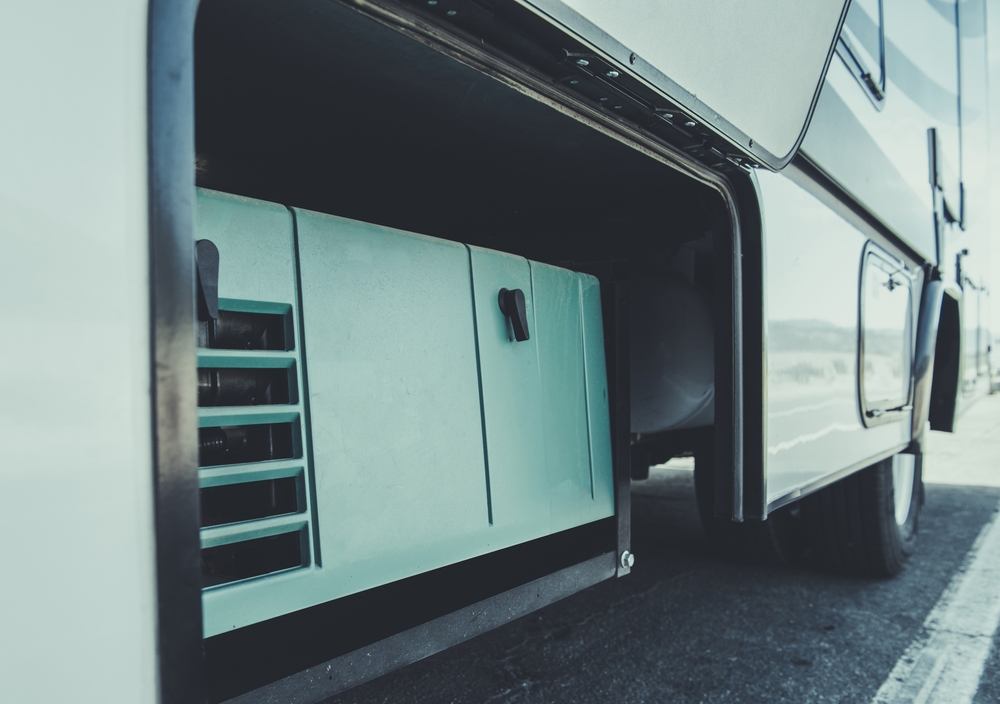
They're quieter than many people expect because they're mounted inside insulated compartments and connected directly to the RV's fuel system.
The downside is cost. Built-in generators are significantly more expensive to purchase, install, and repair than portable models. They're also dedicated to the RV, so they can't easily be used elsewhere.
Inverter vs. Conventional Generators
One of the biggest decisions isn't portable versus built-in—it's inverter versus conventional.
Inverter generators produce cleaner electrical power that's safe for laptops, televisions, CPAP machines, and modern electronics. They also automatically adjust engine speed based on electrical demand, making them quieter and more fuel efficient.
Conventional generators run at a constant engine speed regardless of how much power you're using. They're generally less expensive per watt and work well for high-demand applications, but they're louder and consume more fuel.
For most recreational campers, inverter generators are the better choice. The quieter operation alone is often worth the investment, especially in campgrounds where nobody wants to hear a generator running at full throttle all evening.
This is where many buyers either overspend or end up disappointed.
If your goal is simply charging batteries, running lights, and making coffee in the morning, a relatively small inverter generator may be all you'll ever need.
If you plan to run one rooftop air conditioner, microwave, refrigerator, and several outlets simultaneously, you'll likely want something in the 3,000- to 4,500-watt range.
For large motorhomes with multiple air conditioners and residential appliances, onboard generators producing 5,500 watts or considerably more are often necessary.
Rather than buying the biggest generator you can afford, start by listing what you actually expect to run at the same time. That's usually a far more accurate way to determine the right size.
There isn't a universal answer because every RV owner camps differently.
If you own a travel trailer and primarily visit campgrounds or take weekend trips, a quality portable inverter generator is hard to beat.
If you're building out a camper van with lithium batteries and solar, you may only need a small backup generator—or none at all.
If you're traveling long distances in a Class C or Class A motorhome, especially through hot climates where air conditioning is essential, the convenience of an onboard generator becomes much easier to justify.
The best RV generator isn't necessarily the biggest or the most expensive. It's the one that reliably powers the equipment you actually use while fitting the way you travel.